


The Human Factor in Bridge Strikes
- Lisa Dorn
- Nov 21, 2025
- 3 min read
Updated: Nov 22, 2025
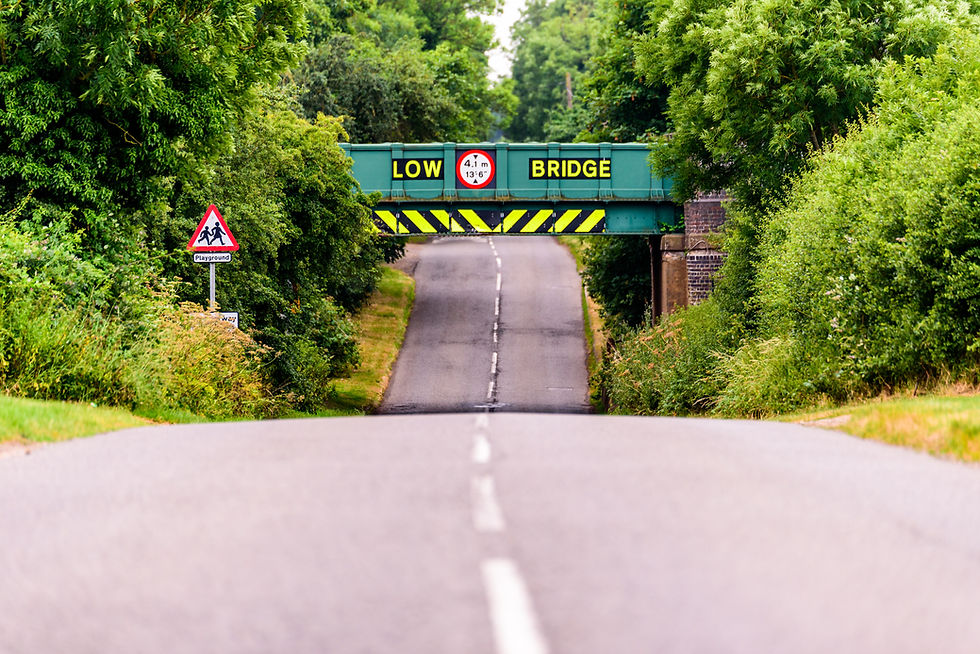
A low bridge strike occurs when an over-height vehicle collides with a bridge. On average, five bridge strikes occur every day in the UK, with around 2.5% involving buses (RTIG, 2021). Although bridge-related crashes account for less than 1% of total road collisions, they are typically more severe than other types of crashes (Tran et al, 2025). Network Rail estimates that bridge strikes cost the rail industry over £20 million annually in delays, cancellations, and repairs. Operators are often required to compensate bridge owners and, in some cases, risk losing their operator’s licence.
Despite major investment in engineering and technology-based interventions such as in-vehicle warning systems, the number of low bridge incidents remains high. Driving a bus or truck is a complex cognitive task that involves route navigation, traffic monitoring, and interaction with vulnerable road users. Urban driving environments demand constant prioritization of visual information. The first comprehensive UK study on bridge strikes was conducted in 1993 by the Department for Transport (DfT). Analysis of 1,550 incident reports revealed key human factor causes:
· Drivers were unaware of their vehicle’s height (32%)
· Equipment was left raised (e.g., cranes or tippers) (26%)
· Inadequate low bridge warning signs (13%)
In 2012, the Rail Safety and Standards Board (RSSB) observed unsafe driver behaviour at low bridges, noting that:
· Some drivers exited their vehicles to judge clearance
· Others passed under low bridges at speed despite minimal clearance
· Traffic lights before bridges encouraged drivers to “rush the lights”
· Car drivers sometimes failed to yield to high vehicles under arch bridges
Further analysis by RSSB of over 19,000 bridge strikes (2000–2010) confirmed that human error was central to many incidents (Stout and Basacik, 2013). Key issues included:
· Incorrect stowing or shifting loads altering vehicle height
· Misjudging or failing to measure vehicle height
· Poor or incomplete route planning, especially during diversions
· Failure to notice or interpret warning signs
· Misalignment under arch bridges due to evasive manoeuvres

Our Study Findings
Lack of responses to low bridge signs and in-vehicle alerts led Go-Ahead to commission PsyDrive to investigate the human factors contributing to bridge strikes (Dorn, 2025). The study found that risk of a bridge strike increased when the bus is out of service or “dead running,” when on a diversion, or when drivers choose their own return routes. Distraction, time pressure, and fatigue contribute to poor decision-making and low bridge sign detection. Attentional neglect for road signs, combined with a loss of situational awareness, was a major contributor to wrong turns and bridge strikes.
A Low Bridge Training Programme
Professional drivers in the UK must pass theory and practical tests; however, the PCV and HGV tests do not specifically assess awareness of low bridges. Although drivers are expected to demonstrate general hazard awareness, this gap in targeted training may leave some unprepared for bridge-related hazards. Drivers can fail to scan for road signs, particularly in complex traffic environments. There is now a substantial body of evidence to suggest that hazard perception training improves recognition and anticipation of hazards using filmed driving scenarios. PsyDrive, in collaboration with GoAhead have designed an online low bridge hazard detection training programme. For more information, get in touch or book a place on our accredited 2 day Human Factors course delivered online next week (26th and 27th November) or 30th April to 1st May 2026. Click on the link below to complete the booking form.
References
Dorn, L (2025). Human Factors and Bridge Strikes. Go-ahead Group unpublished report.
Department of Transport (1993). Progress to Reduce Bridge Bashing. HMSO, London, U.K.
RTIG (2021) Low Bridge Strikes. Improving public transport through technology. RTIG library reference: RTIGT044-1.1. October
Stout, M. J. and Basacik, D. (2013). Reducing the number and impact of railway underline bridge strikes. Rail Human Factors: Supporting reliability, safety and cost reduction, 80.
Tran, T. T., Truong L. T. and Theofilatos, A. (2025). A comparison between bridge-related and non-bridge crashes: severity, vehicle involvement, and motorists’ characteristics. Traffic Injury Prevention, 26(2), 191-197.
Comments